Construction delay penalties: the real causes and how Archireport helps professionals prevent them
17 September 2026
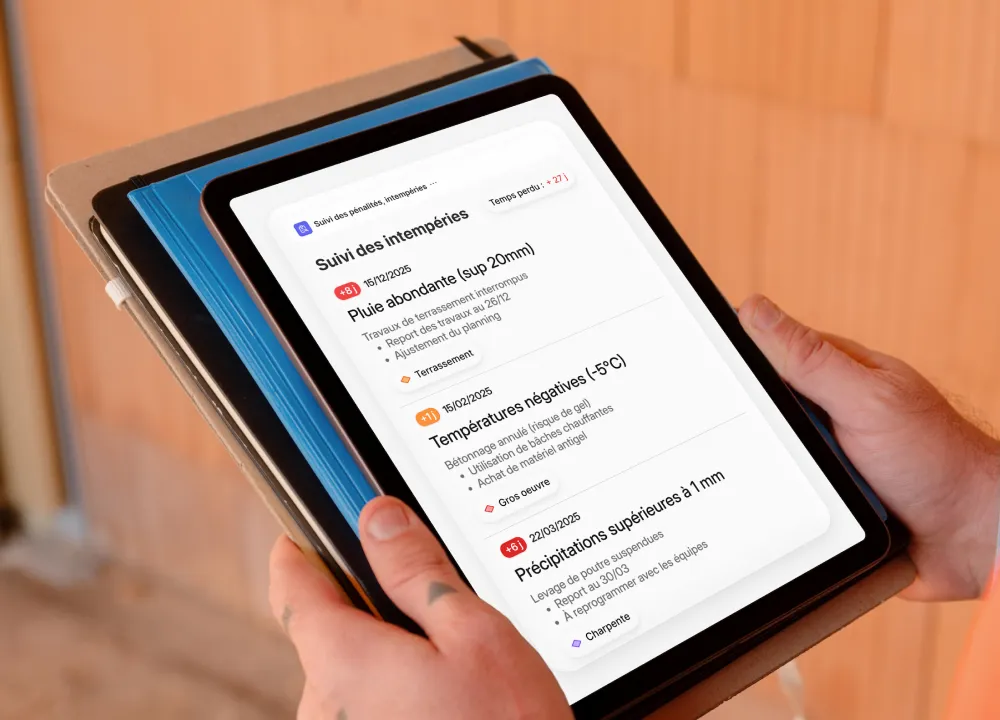
A site rarely falls behind because of one big problem. Most of the time, delays come from an accumulation of small slips: a plan updated too late, a contractor waiting for approval, a snag holding up the next stage, a delayed delivery, a site meeting where a decision isn’t made…
At the time, each delay seems minor, but added together they end up disrupting the schedule. The dryliner can’t start because the electrician hasn’t finished. The painter pushes back their visit. Handover is postponed. And in the end, you’re facing late completion penalties.
For an architect or a project manager, the challenge is simple: spot these weak signals as early as possible, before they become a real scheduling problem.
The good news: most of these delays can be avoided with rigorous site monitoring. This article looks at the real causes of delays, how penalties work, and how to meet your deadlines day to day.
Construction delay penalties: what the contract says
Let’s start with the framework, because it is often unclear to the people involved.
Delay penalties, often called liquidated damages, are amounts set out in the contract. A clause in the works contract sets the completion period, the handover date and the amount due for each day of delay.
The rules vary from one country and one type of contract to another. In private contracts, the amount is generally negotiated freely between the parties. Public contracts often follow standard terms: in France, for example, the general conditions for public works contracts (CCAG Travaux) suggest a reference formula of around 1/3000 of the contract value per day. On a €300,000 project, that quickly adds up to several hundred euros a day.
A few points worth knowing so you are not caught out:
Formal notice. Penalties generally apply after the contractual deadline, sometimes only after a formal notice has gone unanswered. It all depends on what the contract says.
Calculation and cap. Penalties are usually calculated per calendar day of delay. Many contracts set a cap (for example 5% of the contract value). Beyond that, termination is often considered.
Adjustment by the courts. In many legal systems, a judge can reduce a penalty that is clearly excessive. In France, Article 1231-5 of the Civil Code even allows a derisory penalty to be increased. A penalty clause is therefore never completely untouchable.
Grounds for exemption. A delay does not always lead to penalties. Bad weather (beyond a certain number of days), force majeure or additional works ordered by the client legitimately extend the completion period, provided there is a written record of them.
On site, it’s this last point that makes the difference. A justified, documented delay doesn’t cost you; a delay that is simply suffered and poorly recorded does.
The real causes of construction delays
Behind every penalty there is a concrete cause. We have grouped them into five main families:
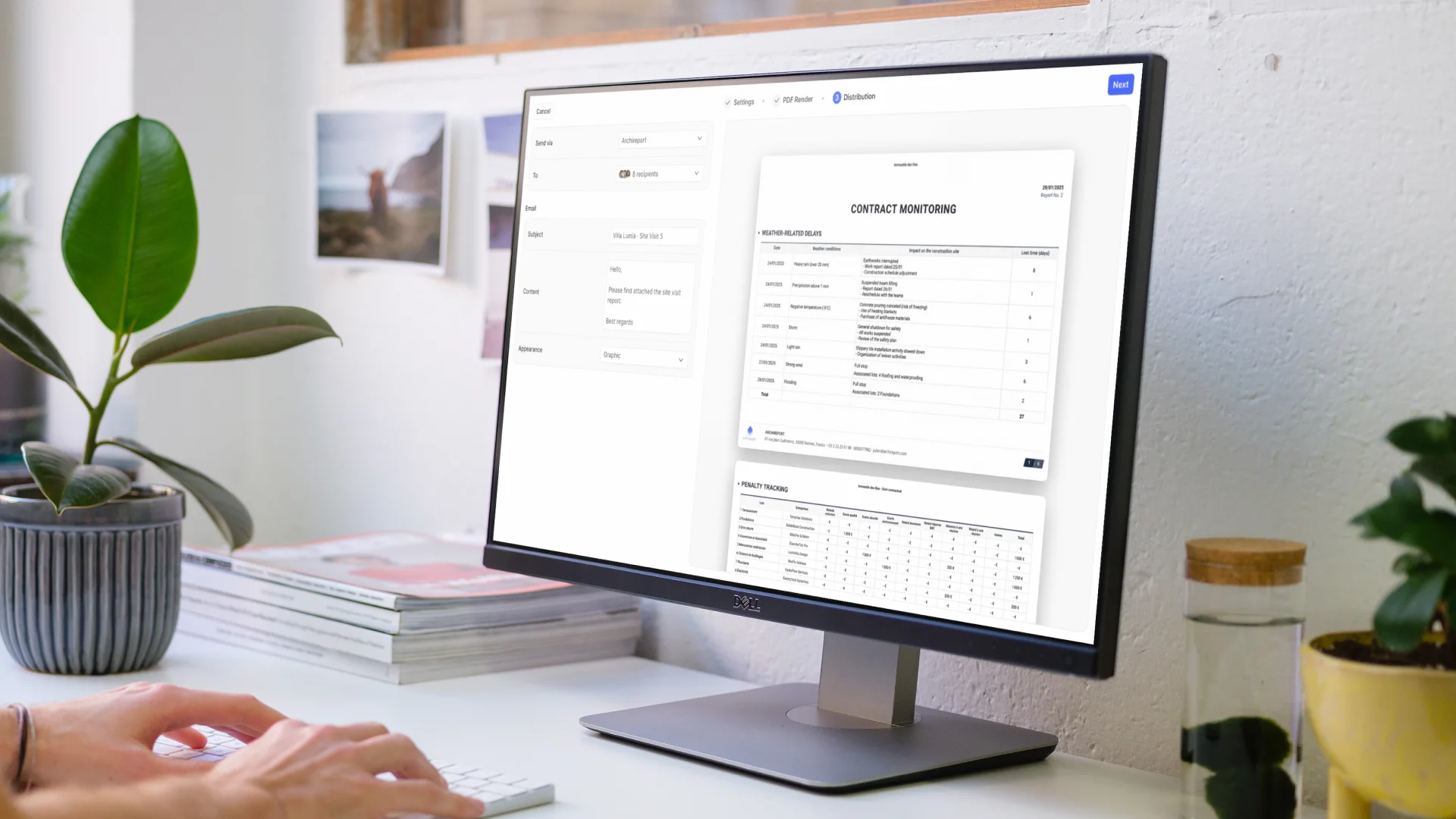
Weather and site conditions. Rain, frost, heatwaves: bad weather can slow down certain trade packages. It is a very common cause and often grounds for exemption. But you still need a written record of every bad weather day, otherwise the client won’t recognise them. The Penalties, bad weather & document tracking module is designed precisely to keep that log day by day.
Contractor failures and poor coordination. A tradesperson who doesn’t turn up, a trade package that isn’t ready and holds up the start of the next one, a contractor who underestimates their workload… Coordination is the number one source of delay. When one trade waits for another, the whole chain shifts.
Supply delays. Materials out of stock, supplier lead times… A single missing component can hold up an entire trade package for days.
Changes during the works. Even when additional works are legitimate (a client who changes their mind, a technical constraint that emerges…), they delay the schedule. Their impact on the timescale still needs to be recorded when they are decided, with an approved additional works request followed by a site instruction that sets the new deadline.
Lack of monitoring and communication. This is the quietest cause, and yet the most frequent. When information flows poorly and there is no effective monitoring, it is hard to notice the problem before it’s too late.
Why most delays can be avoided
Apart from the weather, which remains beyond anyone’s control, most other failures can be avoided by making sure the site is properly monitored.
A supply delay spotted a week in advance can be worked around. A tradesperson chased in time turns up. A change whose impact has been recorded doesn’t come back to haunt you. An up-to-date schedule shows the drift before it sets in.
This is where site monitoring software like Archireport changes everything.
How Archireport helps you meet your deadlines
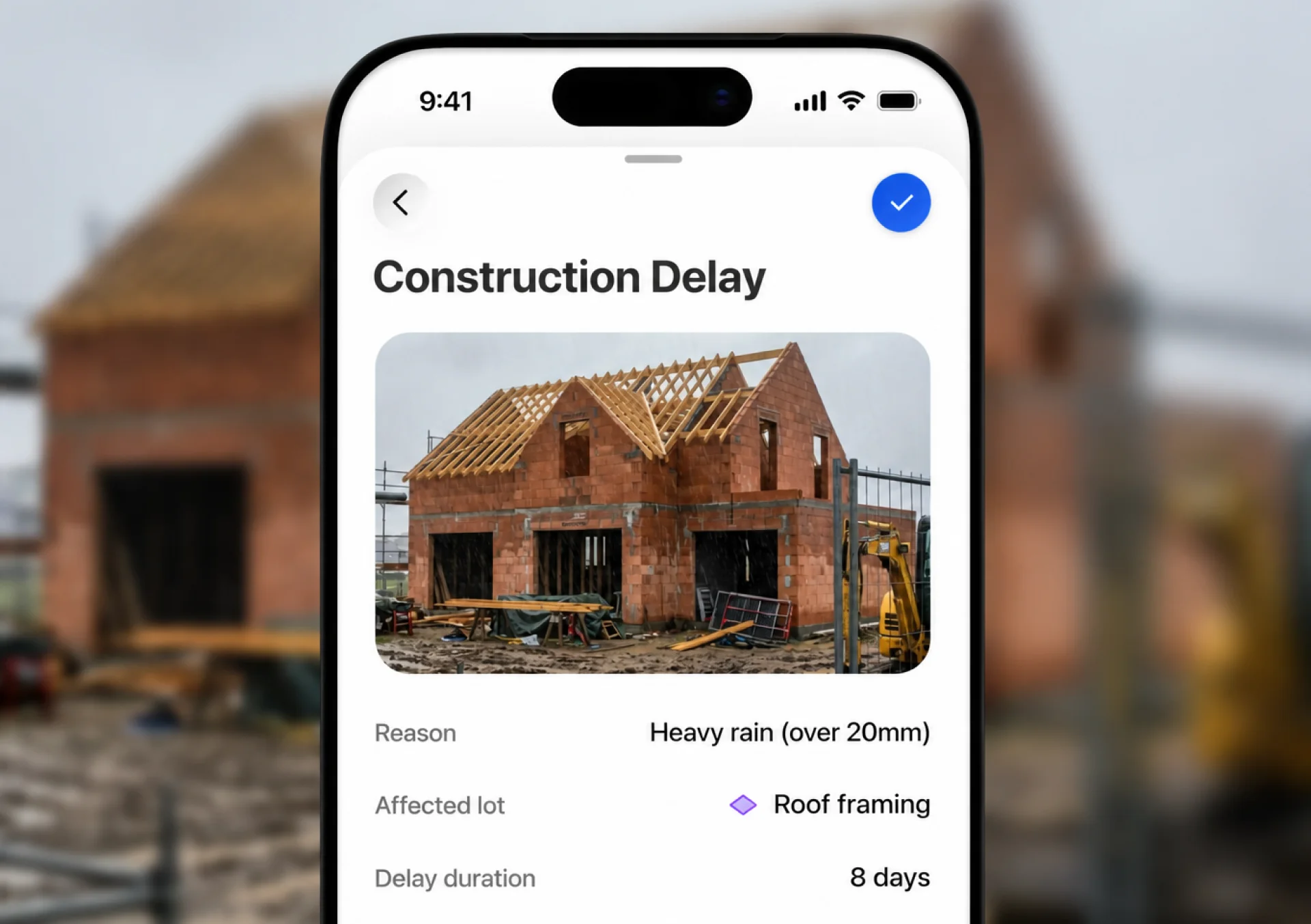
Archireport is a site monitoring app designed for the field. All the information is collected on site and sent straight to the right people.
- You see progress trade package by trade package on your schedule. A task that slips is visible immediately, and you can react before the delay spreads.
- You record every observation and every snag on the plan, dated and illustrated with a photo. If there is a dispute over a delay, you have proof of who was supposed to do what, and when.
- Your site report goes out automatically within minutes of the visit. Contractors know what is expected of them without waiting 48 hours.
- With ar.live, your contractors follow their snags and confirm their actions directly, and you don’t have to travel to the site to approve changes.
Monitoring suited to your trade
Deadline pressure doesn’t weigh the same depending on your role.
The project manager coordinates the trade packages and protects their liability towards the client. The site manager drives progress and chases contractors every day. The architect keeps a clear record of their visits. The site supervisor reports issues from the field in real time.
Key takeaways
Delay penalties hit when a site goes off track without anyone having seen it coming. Yet most delays stem from a lack of information: an untracked delivery, a tradesperson not chased, a change not recorded. Rigorous site monitoring shared in real time tackles the problem at the root, and gives you the evidence you need if a dispute arises.
Want to take back control of your deadlines? Try Archireport free for 30 days, with no commitment and no credit card, and test our Penalties, bad weather & document tracking module.
You might also like these modules
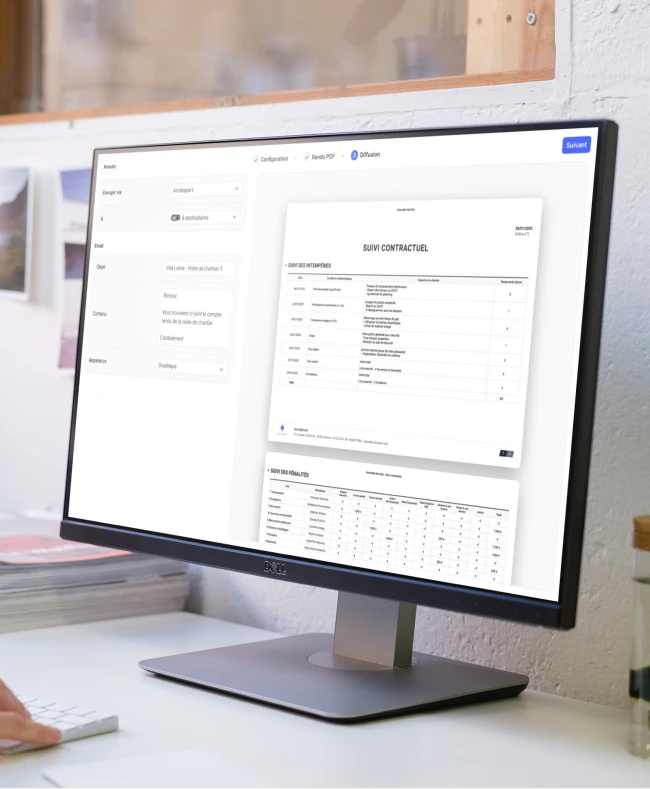
Penalties, bad weather & document tracking
Free
Penalties, bad weather & document tracking
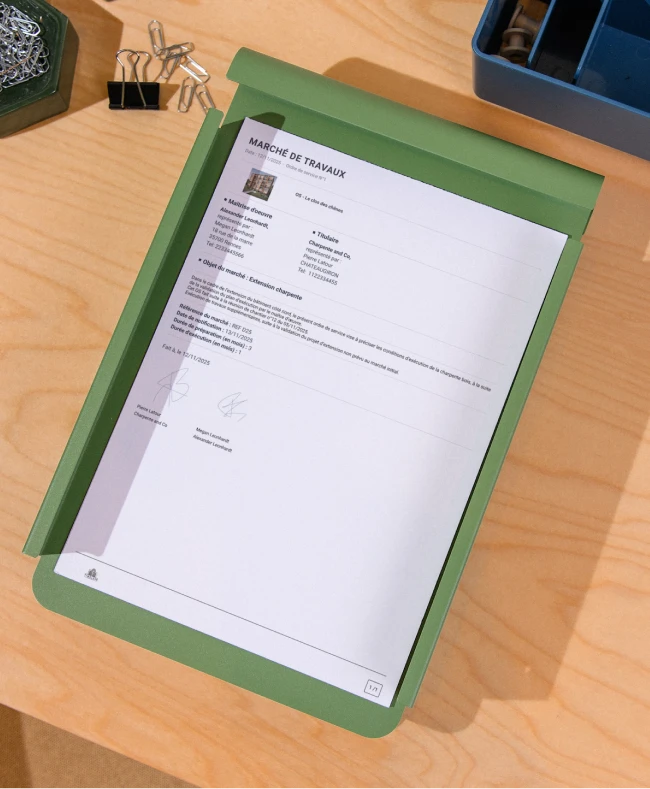
Site instruction
Free
Site instruction
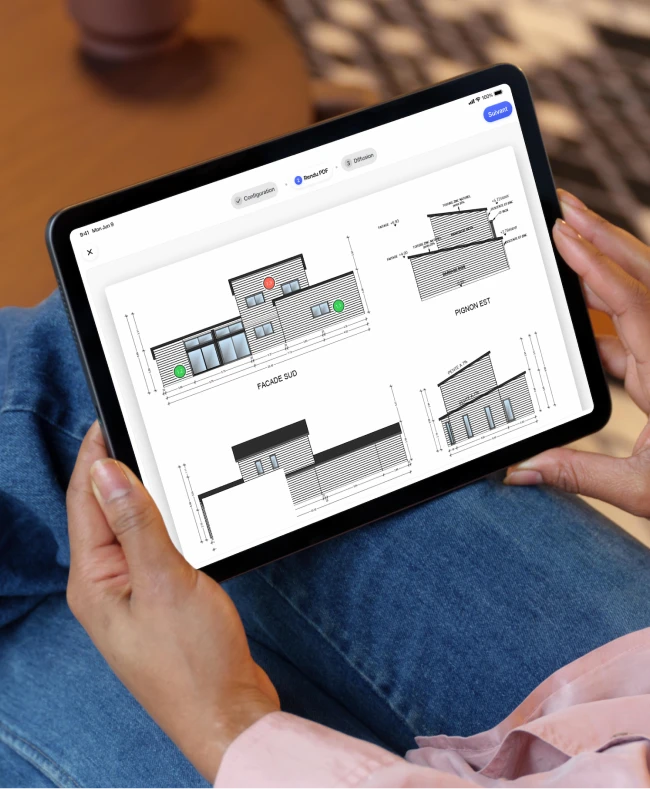
Site diary
Free
Site diary
Save 60 minutes on your next site visit.

Unlimited projects

Ready to use

No credit card required