
Interview with Mylène LE BERRE, architect and Archireport user
Mylène Le Berre, Architect
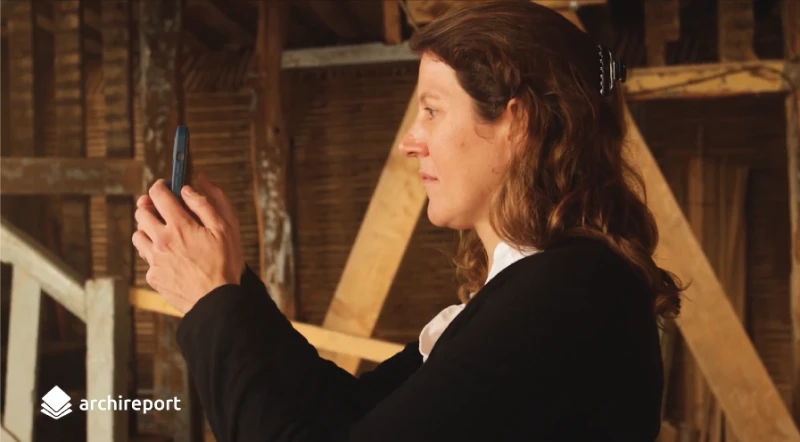
I’ve been using Archireport for several years now, and it lets me monitor my sites while keeping an archive of all the exchanges. I’ve even extended it to the design phase, which means I can generate a site report from the first sketches and the first discussions with the client. It gives us a shared memory, whether for clients, private individuals or the project management team when we work with a structural engineering firm or a thermal engineering firm.
My site reports are mostly written out. Of course I add photos marking the points the contractor needs to check. I also often add notes for myself and lists of things to remember in the little notepad, to remind me of things to include in the coming weeks or months. The topics organised trade package by trade package let me cover the important points. In the schedule too, there are sometimes things to include, openings to reserve… so this little notepad lets me read it back and have it all in mind before the visit.
Some of this information may or may not turn out to be useful, but in any case it’s there as a reminder.
I think it’s a great help for all the contractors. It also saves me time writing, and it means the layout is always the same. The contractors know exactly where to find their observations, and it means we all have in mind the list of things to check and do on site.
I think every contractor finds it easier to understand the site. It also gives the other trade packages illustration photos, because there are photos of the observations but also general photos of the site for the client.
It lets the other contractors see how far along the works are. For example, here we’re doing the roof structures on the top floor. I know the plasterer has seen it; he’ll handle the insulation, and if he needs more information he’ll talk to the carpenter. I also add the changes made along the way to his trade package and he can approve them or not.
So the observations aren’t just for the people I’ve seen on site, but also to inform every trade package about progress and about what needs to be produced or sent, such as technical data sheets. I also often include the observations from the inspection body and the health and safety coordinator. They write their own reports, but for the client I think it’s a plus to have everything in one document. For example, if a contractor is due on site, I let the health and safety coordinator know which day, so they can come by beforehand if they haven’t done their preliminary site visit.
I think it makes the site easier for the client to understand. Some clients are very present on site, others not at all or much less. Reading the site report lets them see what’s going on, or at least that’s what I try to achieve every time. It’s a kind of history that really lets you piece together the whole project, site report by site report.
That’s also why it’s worth doing it from the design phase, because we have this shared memory of the project with the whole team. It lets us discuss details and remember the measurements we took, kept and put in the site report. For a door size, for example, details that we include in the site report so we don’t forget them.
I use my phone. I find it handy because sites are sometimes tricky, like this one, where access isn’t easy. My phone is ideal: it’s in my pocket, I can go up the scaffolding and add photos when I spot particular issues.
I take a photo as a reminder and then I can write a short comment; I find that simple. I often complete my site reports back at the office and write them up a bit more. There are sometimes things to coordinate or information to check, so I check it and then add it to the site report.
The simplest and most effective feature is really marking points on the photo. At a glance, you can locate the observations on a plan and on a photo.
I also find the distribution tool and the attendance table very handy. They let the client see who was there and who wasn’t. They also show which trades are on site at any given time.
Everyone’s contact details are included too, which is practical because if I can’t be reached, the contractor has everyone’s phone numbers. There may be urgent matters to deal with, so it’s good to have all that information in a single document.
It saves me time, and it saves everyone time reading documents. I use the time I save to leave a little earlier and see my children.
Plus d’interviews
6:08
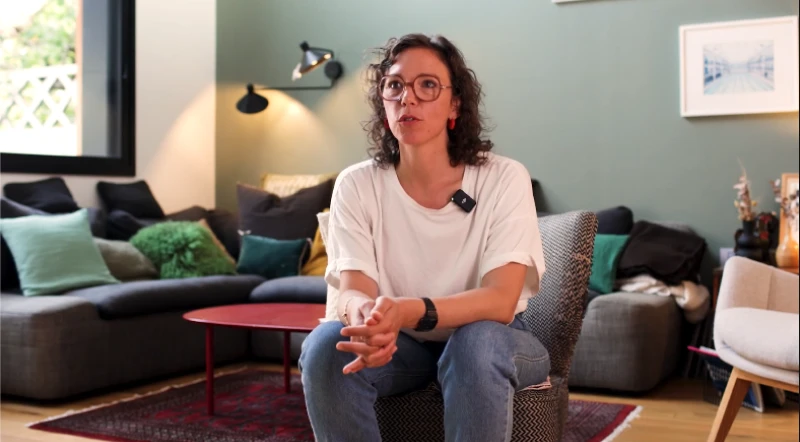
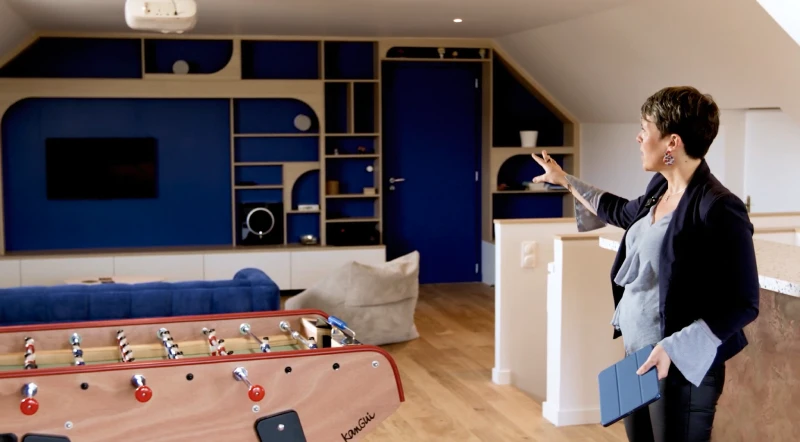
A semi-detached house completely transformed (with extension), with Elsa Mut, architect
She pays particular attention to integrating each project harmoniously into its surroundings, favouring restraint, durability and attention to detail. Each of her projects also follows an environmental approach: making the most of solar gain and natural light, energy efficiency, renewable materials…
Save 60 minutes on your next site visit.

Unlimited projects

Ready to use

No credit card required