Construction schedule: how to build it, track it and optimise it
16 August 2026
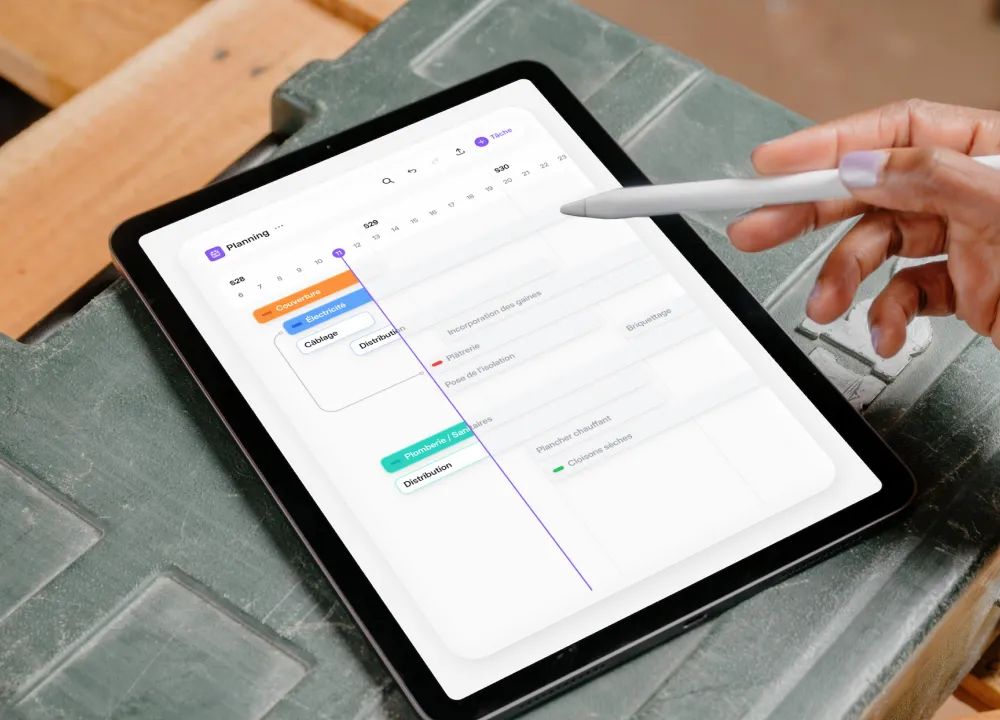
The construction schedule is the backbone of a building project. It says who does what, in what order and by when. When it’s right, the site practically runs itself. When it’s wrong, everyone ends up chasing time.
This guide sets out the method for building a reliable schedule, the different formats available, the mistakes that cost weeks, and how to keep it up to date from the field.
What a construction schedule is really for
A construction schedule isn’t there to look good in meetings; it’s there to help you make decisions.
It coordinates the trades, anticipates procurement and gives a credible handover date. It also serves as the reference when a delay appears: you can see immediately what is slipping, and why.
With a good schedule, you can spot a problem in advance. Without one, you discover it the day the next contractor turns up for nothing.
Building a construction schedule step by step
A reliable schedule is built in a precise order. Five steps, in this order.
1. Identify every task
Start by listing all the tasks in the project, trade package by trade package. Structural works, fit-out, finishes, but also the invisible steps: orders, approvals, inspections, cleaning.
In practice, a task forgotten at this stage becomes a hole in the schedule. Break the work down into tasks small enough to be tracked on site.
2. Estimate the duration of each task
Every task gets a duration. Draw on your past projects and on feedback from contractors.
In practice, this is where people get it wrong most often. An overly optimistic estimate contaminates the rest of the schedule. A realistic duration is better than one that suits the end date.
3. Sequence the tasks
Tasks rarely follow one another at random. Some must finish before others can start. You can’t paint before the partitions are up.
Link the tasks together with dependencies. In practice, you are drawing the logic of the site: what can progress in parallel, and what has to wait.
4. Identify the critical path
The critical path is the sequence of tasks that determines the total duration of the works. A delay on any one of them delays the whole handover.
Tasks outside the critical path have some float. On site, this changes how you react: a delay on a critical task is urgent; a delay on a task with float can be handled more calmly.
5. Add contingency
A schedule with no contingency is a wrong schedule. The unexpected is part of every site: weather, deliveries, technical surprises.
Build in contingency on sensitive tasks and before key milestones. In practice, this contingency isn’t wasted time. It’s what absorbs the knocks without pushing back the end date.

The different types of construction schedule
There isn’t just one schedule format. Three are commonly used, from the simplest to the most detailed.
The bar chart
The bar chart shows each task as a horizontal bar on a calendar. Easy to read, it suits medium-sized projects.
Its limit: it shows dependencies between tasks poorly. You can see when, but not always why.
The Gantt chart
The Gantt chart is the most widely used format. It takes the bars and adds the links between tasks, showing the critical path.
In practice, you can see progress, delays and their consequences at a glance. It’s the standard for managing a construction schedule.
The network diagram (PERT)
The network diagram, or PERT chart, represents tasks and their sequence as a graph. It focuses on the logic of dependencies and calculating the critical path.
In practice, it’s kept for complex projects where sequencing is the main challenge. For an ordinary site, a Gantt chart is usually enough.
Common mistakes to avoid
Most schedules slip for the same reasons. Knowing them helps you anticipate them.
Underestimating durations
This is the classic mistake. You want an attractive end date, so you cut back on durations. The schedule looks achievable, but it can quickly drift.
On site, an optimistic duration is paid for in a cascade, each task pushing back the next.
Forgetting drying and lead times
Concrete curing, a screed hardening, bespoke joinery on order: these periods don’t always appear in the schedule. Yet they hold up what follows.
In practice, an unanticipated six-week lead time can stop an entire trade package. These periods must appear as tasks in their own right.
Allowing no contingency
A schedule calculated to the day can no longer be held at the first setback. Without contingency, the slightest delay becomes a late handover.
Freezing the schedule
A schedule isn’t a document you draw up once and for all. A schedule that is never updated no longer reflects the site after a few weeks.
In practice, that’s the worst situation: everyone relies on a document that is no longer reliable.
Tracking and updating the schedule in real time
A schedule has to live alongside the site. This is where a digital tool changes everything.
With Archireport’s monitoring & scheduling, you see progress trade package by trade package and update the schedule from the field. A task that slips is visible immediately, along with its impact on what follows.
The schedule is shared with contractors and the client. Combined with the automatic site report, every visit updates the real state of the site. So on site, there’s only one version of the schedule, accessible to everyone and always up to date. No more Excel file that goes out of date as soon as a trade package falls behind.
Alongside it, the site diary keeps a daily record of the site (attendance, deliveries, incidents), and the penalties & bad weather tracking module documents every lost day so you can justify a change to the schedule.
The site manager and the project manager can manage deadlines without spending hours back at the office.
Landscaping projects
Landscaping has its own scheduling constraints. You can’t plant at any time of year: the seasons and the weather have a strong impact.
The landscape professional has to sequence tasks around favourable windows: earthworks, planting, turfing, irrigation. In practice, a successful landscaping schedule treats seasonality as a hard constraint, just like the dependencies between tasks.
The principles stay the same: list the tasks, estimate, sequence, keep contingency. The difference lies in the weight of the natural calendar.
Key takeaways
A good construction schedule rests on a method: list every task, estimate durations honestly, sequence the dependencies, identify the critical path and keep contingency. The format (bar chart, Gantt, network) depends on the complexity. And above all, a schedule is only worth anything if it is kept up to date.
Want a schedule that really follows your site? Book a demo for you and your team, or try Archireport free for 30 days, with no commitment and no credit card. Update your schedule from the field, and see delays coming before they cost you.
You might also like these modules
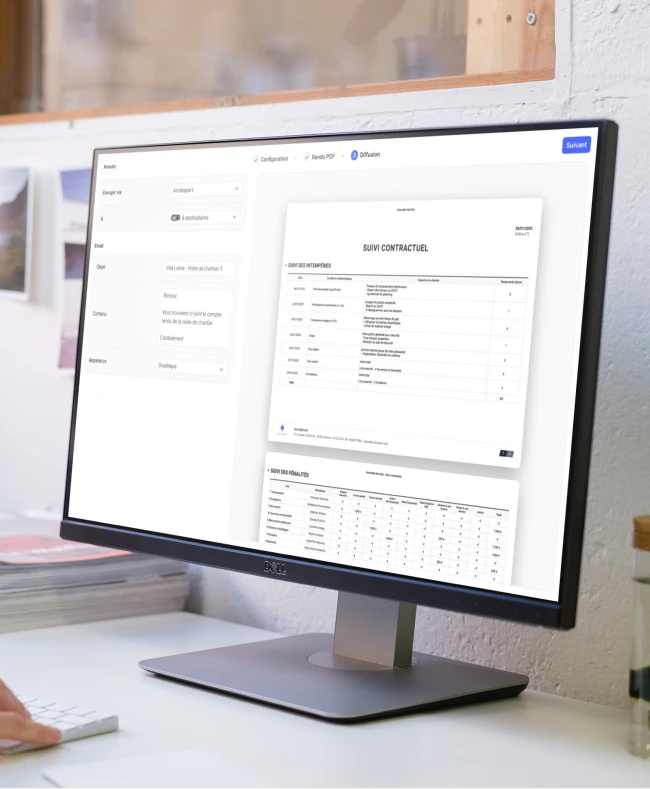
Penalties, bad weather & document tracking
Free
Penalties, bad weather & document tracking

Daily reports
Free
Daily reports
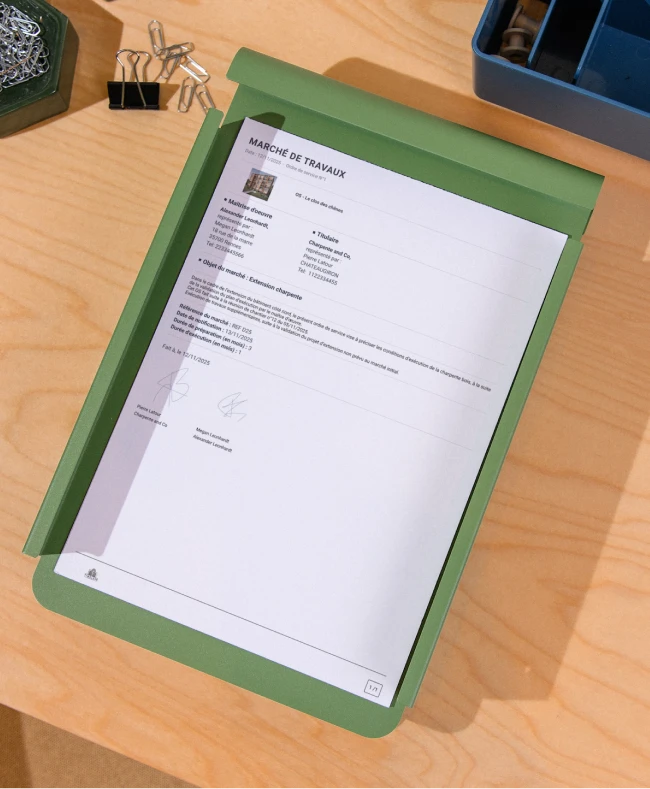
Site instruction
Free
Site instruction
Save 60 minutes on your next site visit.

Unlimited projects

Ready to use

No credit card required