
How Human Architect saves 80% of its time on site monitoring
Alain Paris, Architect
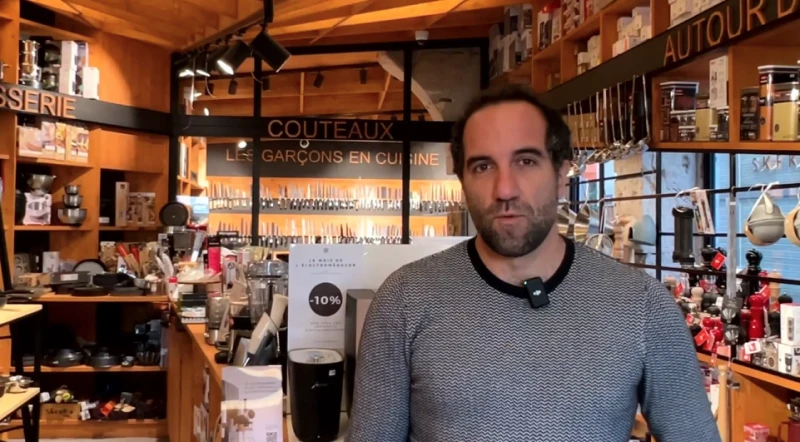
We’re the Human Architect agency, based in Lyon’s 1st arrondissement. There are 8 of us in total: 2 partners and the rest of the team.
We work on projects of every scale, from shops to apartment buildings. We also do public facilities, town halls and nurseries. Our main focus, though, is bio-based and geo-sourced buildings, with an eco-responsible, environmentally minded approach.
We always try to work on timber frame designs and the use of local materials. That approach is the common thread running through our projects.
Can you tell us a bit about this shop?
We’re in the Les Garçons en Cuisine shop. The idea for this shop was to manage the number of products on display and turn it into an asset, while keeping the shop’s identity, which is all about high-quality, long-lasting products.
That’s also what guided the choice of a raw material like spruce, which was stained, and for which we tested different shades to coordinate it with the stainless steel in particular.
The ceiling is a response to the shelving that holds the profusion of kitchen utensils around the edges. It turns into the ceiling and comes down to guide customers towards two parts of the shop, a right-hand area and a left-hand area here.
You can’t see it, but underneath there’s a kitchen and a hob. The idea is to give demonstrations of the products sold in the shop.
“I noticed the stone vault that has also been kept.”
Yes, that was a great discovery during the works, because it had been covered up and you couldn’t see it.
We exposed it, sandblasted it, and chose to leave it visible in the middle of the shop and adapt the ceiling around it. It works well because it leads into the knife cellar behind, which is dedicated exclusively to selling knives.
Why Archireport and not another tool?
We chose Archireport for its ease of use, its interface and also the team. When we first set it up, we had layout problems. We asked the team to help us solve them, and they were fixed quickly and simply. So we’ve stayed loyal, and we’re happy.
The feature you couldn’t do without?
It’s the site monitoring app itself, which lets us optimise our time on site and produce a report on three fronts: photos, location on the plan and written notes. It saves us 80% of our time.
We do 80% of the site report on site. When we leave the site, we already have a very solid base and an archive. We can go back to the photos we took during the works, which we don’t always think to do with traditional site monitoring.
And how did you work before?
The agency is 10 years old, and we’ve been with you for 8 years. Before that, we had less money to invest in this type of software, so we used standard Word and Excel, with the idea that we would move to this kind of solution.
What are the day-to-day benefits for your agency?
The benefits are what I mentioned earlier. For me, one of the main benefits is the time saved, and also standardisation for my project managers, so that everyone uses the tool in the same way. We always produce a site report that follows these steps: photos, location of the observation on the plan, assignment to a trade package, and a first draft of the written report.
Afterwards, we can go back to the office and complete the written part and the groundwork we did on site. It makes us more efficient, clearer and gives more visibility to clients who aren’t necessarily there. We’ve monitored sites where the client was abroad, for example, and this kind of site report helped us communicate better with our client.
Plus d’interviews
6:08
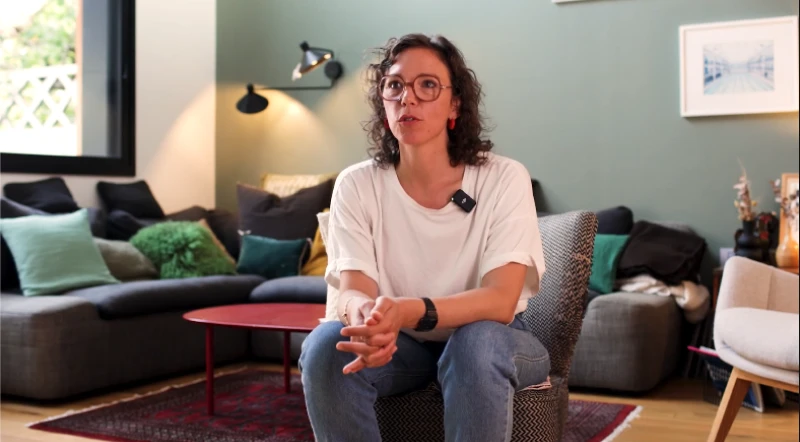
A semi-detached house completely transformed (with extension), with Elsa Mut, architect
She pays particular attention to integrating each project harmoniously into its surroundings, favouring restraint, durability and attention to detail. Each of her projects also follows an environmental approach: making the most of solar gain and natural light, energy efficiency, renewable materials…
Save 60 minutes on your next site visit.

Unlimited projects

Ready to use

No credit card required